
It’s 6:40 on a weekday. You’ve already burned one dinner (literally — the garlic in the pan has gone black), and the vegetables you bought this morning are quietly wilting in the crisper drawer. The fridge door is open, and the day is asking for one more thing.
This is my answer to that moment. One sheet pan, one whole head of garlic, about 50 minutes from now. By the time the timer goes off, the kitchen smells like a garden in August.
It’s a side that behaves itself. It goes next to grilled chicken, burgers, fish — whatever is already happening on the grill — and it doesn’t need babysitting.
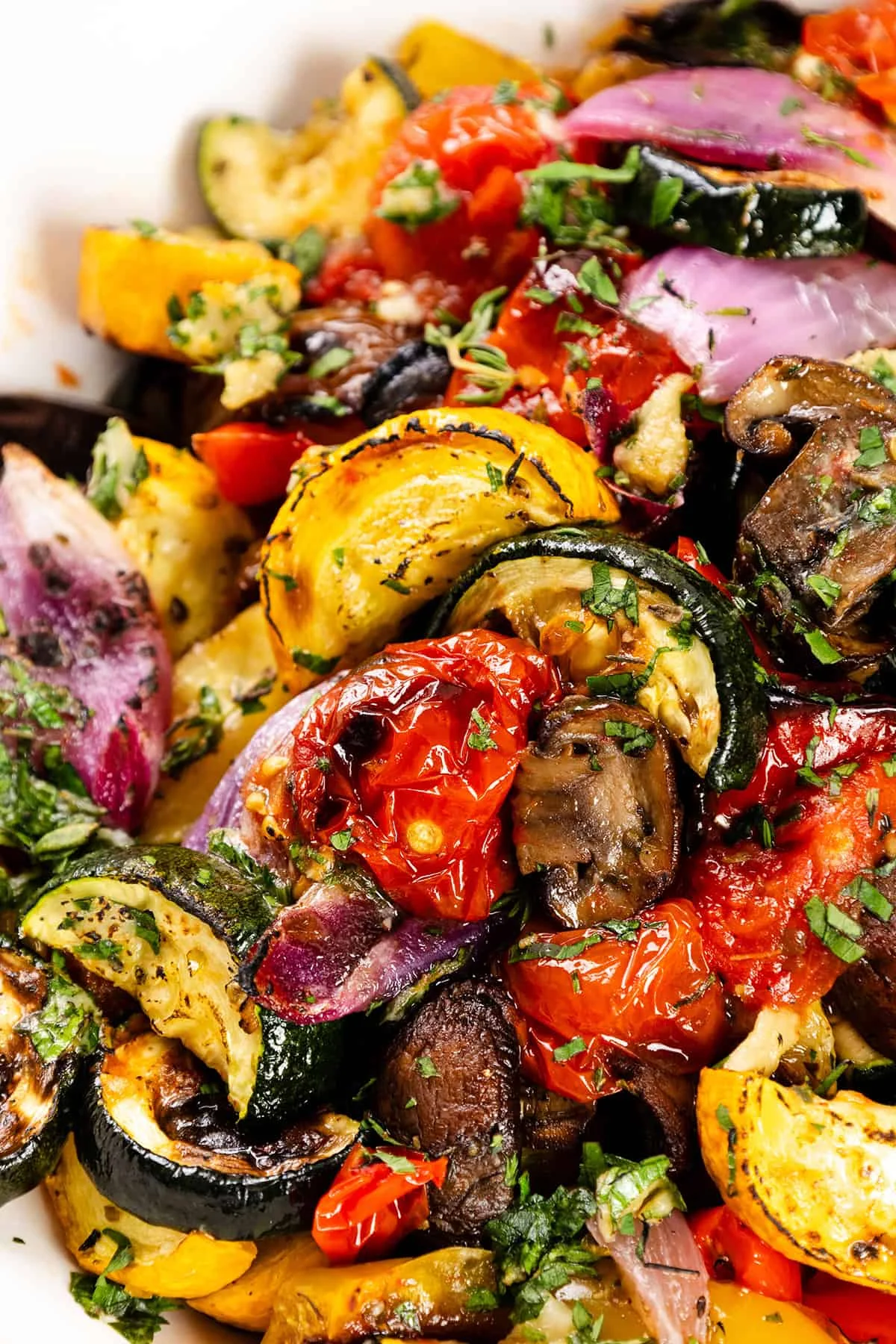
Why this one works
I’ve roasted a lot of vegetables over the years, and the ones that fail always fail the same way: crowded on the pan, low in heat, soft and gray instead of caramelized.
The fix is boring, which is exactly why it works. Cut everything to a similar size, give the pan real room, and run the heat at 425°F. The edges brown, the tomatoes just start to burst, and every vegetable keeps its own shape.
The other half of the trick is the garlic. Roasted garlic is what turns a plain vegetable pan into something worth scraping the bowl over. A whole head, wrapped in foil, goes on the pan with the vegetables. It comes out buttery and sweet, and it mashes into the lemon-herb dressing that coats everything.
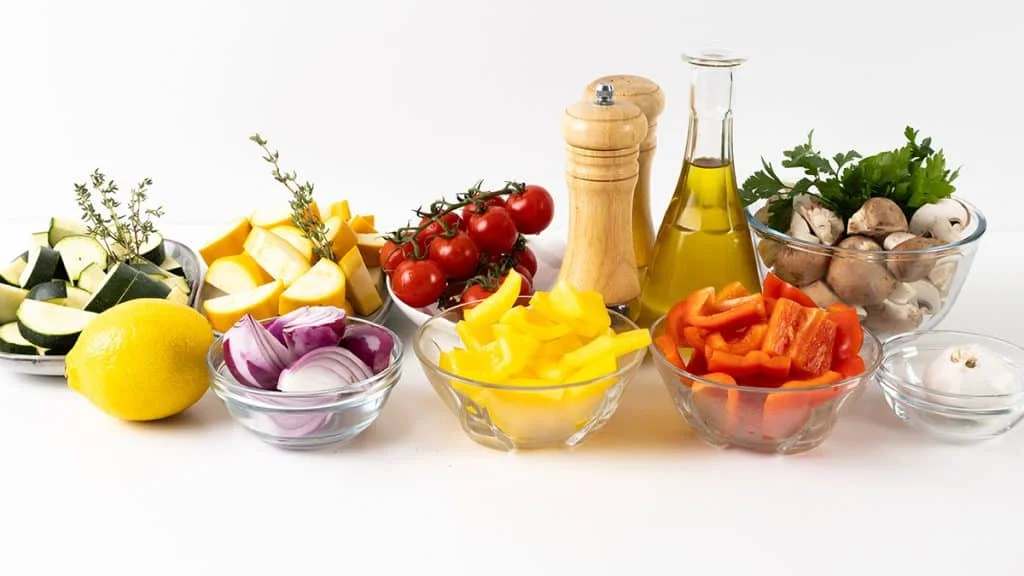
Ingredients
- 2 medium zucchini, cut into thick half-moons
- 2 yellow squash, cut into thick half-moons
- 1 red bell pepper, cut into chunks
- 1 yellow bell pepper, cut into chunks
- 1 red onion, cut into wedges
- 8 oz cremini mushrooms, halved
- 1 pint cherry tomatoes
- 1 whole head of garlic
- 3 tablespoons olive oil, divided
- 1 teaspoon kosher salt
- ½ teaspoon black pepper
- 1 teaspoon dried oregano
- 1 tablespoon fresh parsley, chopped
- 1 teaspoon fresh thyme leaves (or ½ teaspoon dried)
- 1 tablespoon fresh lemon juice
Swap in whatever the season is actually offering: eggplant, asparagus, broccoli, cauliflower, sweet potatoes — anything that can hold its shape in the oven. A fresh, firm head of garlic roasts the sweetest. If you only have roasted garlic paste on hand, it works in a pinch, but freshly roasted is worth the effort.
Fresh parsley and thyme go in after roasting, when everything is out of the oven. That’s when they keep their brightness. Basil, chives, rosemary, or dill are all fine stand-ins.
Five simple steps
- Preheat and prep. Set the oven to 425°F (220°C). Cut all the vegetables into similar-sized pieces. Toss them in a large bowl with 2 tablespoons of olive oil, the salt, pepper, and oregano, until everything is evenly coated.
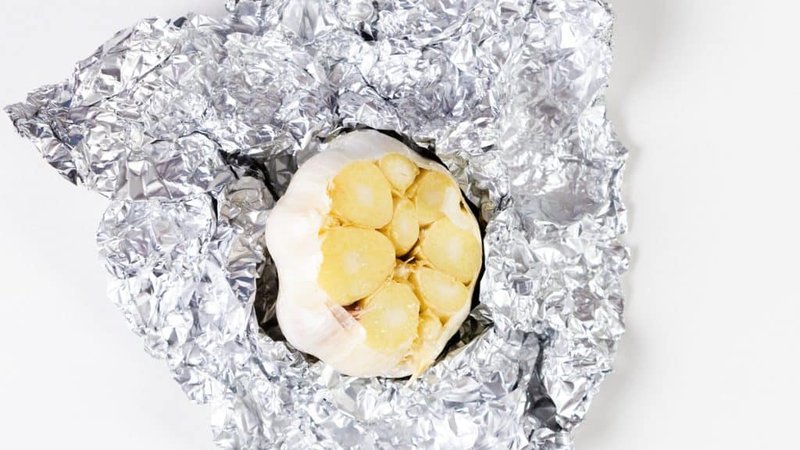
- Wrap the garlic. Peel away loose papery layers from the garlic head, leaving the cloves intact. Slice about ½ inch (1cm) off the top to expose the cloves. Place it on a small piece of foil, drizzle with the last tablespoon of oil, and wrap loosely.
- Roast. Spread the vegetables in an even, uncrowded layer on a large sheet pan and set the wrapped garlic alongside. Roast for 30 to 35 minutes, stirring the vegetables halfway through, until tender with lightly browned edges and the tomatoes just starting to burst. The garlic should be soft and golden.
- Mash the dressing. Let the garlic cool for a moment, then squeeze the softened cloves from their skins into a small bowl. Mash until smooth with a fork and stir in the lemon juice, parsley, and thyme.
- Toss and serve. Move the vegetables to a serving bowl, add the mashed garlic mixture, and toss gently until every piece is coated. Taste, adjust the salt if needed, and serve warm.
Give the vegetables real room on the pan. Crowding traps steam, and steamed vegetables are gray vegetables. If the pan is too full, split the load across two pans — the extra caramelization is worth the second dish to wash.
Cut firmer vegetables slightly smaller than softer ones, so everything finishes at the same time.
Make it your own
- Add cubes of eggplant for a heartier, more Mediterranean-feeling side.
- Toss the finished vegetables with cooked orzo or couscous to turn the side into a light vegetarian meal.
- Finish with crumbled feta, goat cheese, or freshly grated Parmesan.
- Drizzle with balsamic glaze instead of lemon juice if you want a sweeter finish.
- Stir in fresh basil just before serving.
Leftovers keep for up to 4 days in an airtight container in the fridge. Reheat in a 400°F oven for about 10 minutes, or warm gently in a skillet. They freeze for up to 2 months, too — softer after thawing, but fine in pasta, grain bowls, soups, or a frittata.
Start today
- ✓ Buy one head of garlic and whatever firm vegetables are cheapest this week.
- ✓ Chop them and store in an airtight container — you can do this up to a day ahead.
- ✓ Pick your 425°F slot: this roasts in 30–35 minutes with zero babysitting.
FAQs
Why do my roasted vegetables come out watery? Overcrowding. Spread the vegetables into a single layer with real space between them, so moisture can evaporate instead of steaming them.
Can I prep ahead? Yes. Chop everything up to a day ahead and refrigerate it. Roast just before serving for the best texture.
Do I really have to roast the garlic? I’d say yes. Roasting changes garlic from sharp and pungent to sweet, creamy, and buttery — and the dressing tastes completely different because of it.
Dried herbs instead of fresh? Dried thyme works in place of fresh thyme. Keep the parsley fresh — it’s the last thing in, and that’s when it does its job.
What goes with it? Grilled chicken, steak, pork chops, salmon, shrimp, burgers. Or fold it into pasta and grain bowls for a vegetarian plate.
One pan, one head of garlic, 50 minutes. Summer, in a bowl.
— E, your habit neighbor