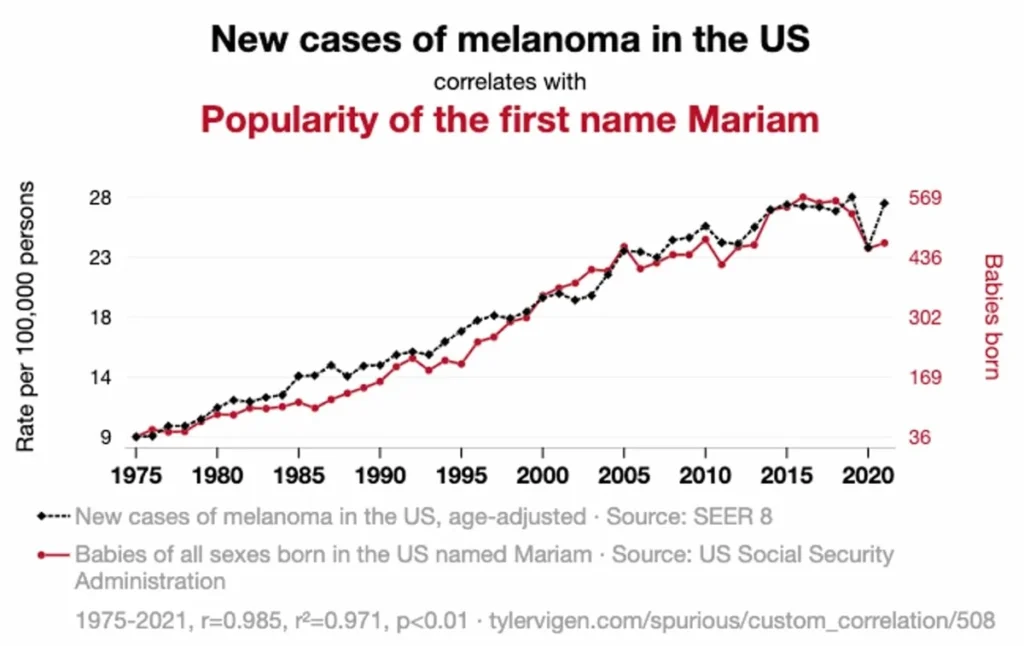
You’ve seen the chart, I know. Skin cancer rates climbing steadily upward since 1975 — and we’ve been slathering on more sunscreen every single year since. A TikTok account with a medical-sounding name put it bluntly: the sunscreens are “not doing the job they’re designed to do,” and it’s “not having good health outcomes for our populations.”
I felt that little pang of doubt too. If I’ve been doing this one thing right for years, why is the number still going up? So I went and read the actual studies. Here’s what I found — and honestly, it’s more encouraging than the chart.
The chart is not what it looks like
First thing to notice: there’s no sunscreen line on that graph at all. It shows one trend — melanoma diagnoses in the US rising since the 1930s — and asks you to assume sunscreen is the cause.
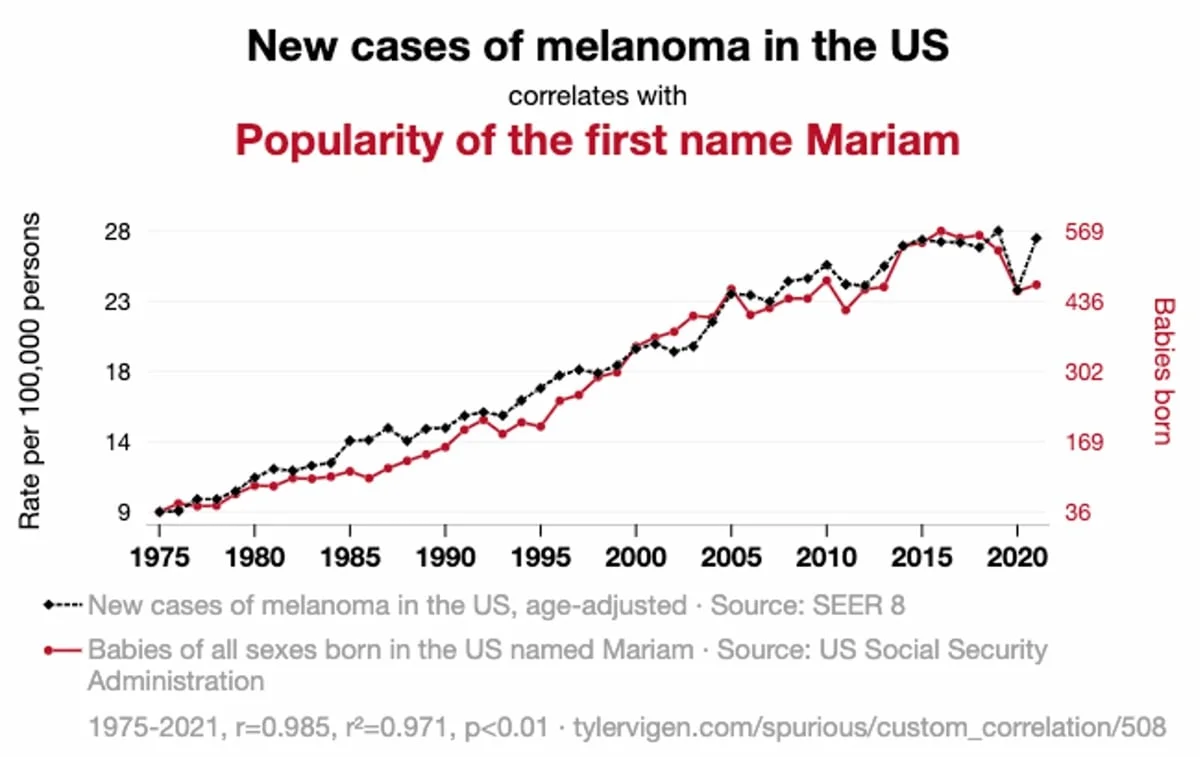
That’s a classic case of correlation pretending to be causation. Plenty of other things have also increased since the 1930s. By the same logic we could blame chocolate, electricity use, or car sales for our skin cancer. A data site called Spurious Correlations even found that US melanoma rates track remarkably well with the number of babies named Mariam. I’d love to hear what that means for the rest of us.
One trial actually answered the question
Real-world trends have a problem: a thousand other things are changing at the same time. The cleanest way to sort cause from coincidence is a randomised controlled trial — split a group in half, change one thing, watch what happens.
The most famous sunscreen trial ever run was the Nambour Trial in Australia. People of similar age and similar skin colour in the same place were split into two groups. The only difference: one half wore sunscreen every single day for 4.5 years, the other half wore it only when they felt like it. Researchers then kept watching for the next 10 years.
If sunscreen were causing cancer, the daily group should have had more of it. They didn’t. For the daily sunscreen group, the trial found:
- 40% fewer squamous cell carcinomas (SCC — the most common non-melanoma skin cancer) during the trial
- about one-third fewer new SCCs eight years later
- 24% fewer actinic keratoses (pre-cancerous sun spots) in the first two years
- 73% less invasive melanoma after 15 years
- thinner melanomas when they did occur — 0.53 mm versus 1.2 mm, and thinner means caught earlier
Bonus from the same trial: daily sunscreen users also had 24% less visible skin aging. So yes, the sunscreen habit is doing double duty.
Other studies applied different amounts of sunscreen to skin, then zapped it with a lamp that mimics the sun’s UV and looked for damaged DNA — the first step toward cancer. More sunscreen, fewer broken DNA strands. The habit holds up.
So why are rates still climbing?
Because other forces are pushing the number up harder than sunscreen can push it down. A few of the big ones:
We’re living longer. The average age of a melanoma diagnosis is 65. More years means more chances for cells to pick up mutations — and decades ago, people simply died of other things first.
We take different sun. Cheaper flights mean beach holidays have become routine, so indoor workers with usually-protected skin suddenly absorb weeks of intense sun every year. Getting to the beach is just easier than it used to be.
We tan on purpose. The appetite for a tan grew around the same time tanning beds arrived in the US.
We’re finding more, not just getting more. Awareness has gone up — the ABCDE checklist for suspicious spots is well known now — so people and doctors catch more cases that used to go unnoticed.
One country is moving the other way
Here’s the part that gave me hope: the rise isn’t universal. In Australia — the country with arguably the strongest sun-protection culture — melanoma in people under 40 has actually fallen. Among 15- to 24-year-olds, rates have roughly halved since the 1980s.
Why? Australia’s SunSmart campaign, and it’s not just “wear more sunscreen.” Knowing sunscreen helps doesn’t make anyone actually wear it. Behaviour follows habit and convenience. So Australia made protection the default:
- “Slip Slop Slap Seek Slide” — slip on a shirt, slop on sunscreen, slap on a hat, seek shade, slide on sunglasses. The whole slogan is about layering protection, not betting everything on one tube
- “No hat, no play” at school — no hat at lunchtime meant sitting on a bench while everyone else played. (Eventually softened to play in the shade, because the teachers felt bad for the sad little kids.)
- School-issue legionnaire hats with the long neck flap — teachers would tell you off if you tucked it up
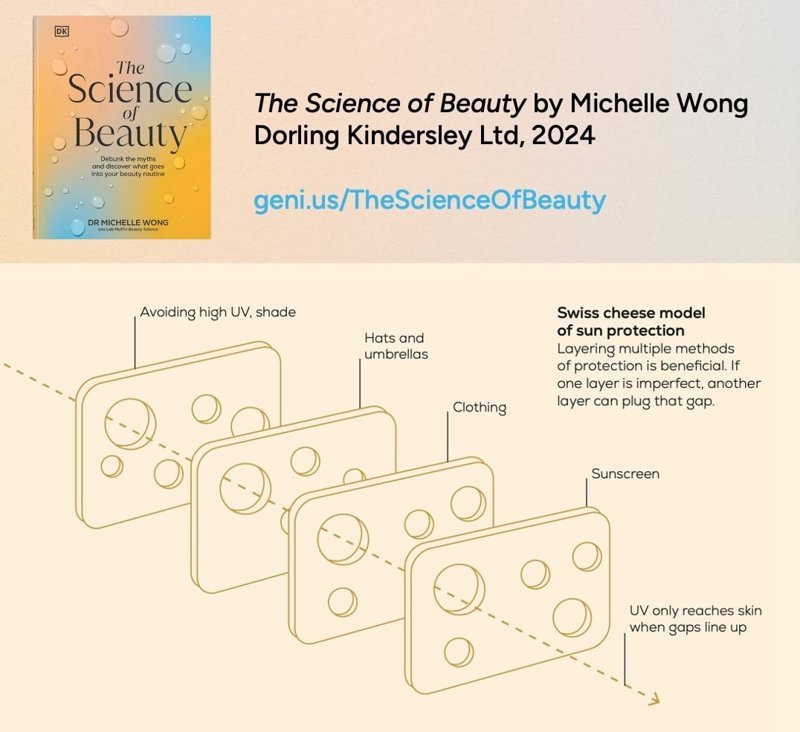
That last point is the one I want you to keep: sunscreen is one slice of a bigger cheese. Layers do the work.
Start today
✓ Add a 30-second sunscreen step to your existing morning routine — after your face wash, before the coffee, same spot every day
✓ Layer before you slather: a shirt, a hat, and shade first, sunscreen last
✓ Put one SPF stick on the shelf where the toothbrush lives, so the morning version of you finds it
And if a spot looks odd — check it with your doctor, not just your mirror.
Sources: Nambour Trial and follow-ups (Lancet 1999; Cancer Epidemiol Biomarkers Prev 2006; J Clin Oncol 2011), sunscreen and skin aging trial (Ann Intern Med 2013), DNA damage study (Acta Derm Venereol 2018), Australian melanoma trends (Med J Aust 2024).
Today’s tiny step
Tomorrow morning, do one sun habit you already skip — just the hat, or just the 30-second slather. One layer is a layer.
— E, your habit neighbor