
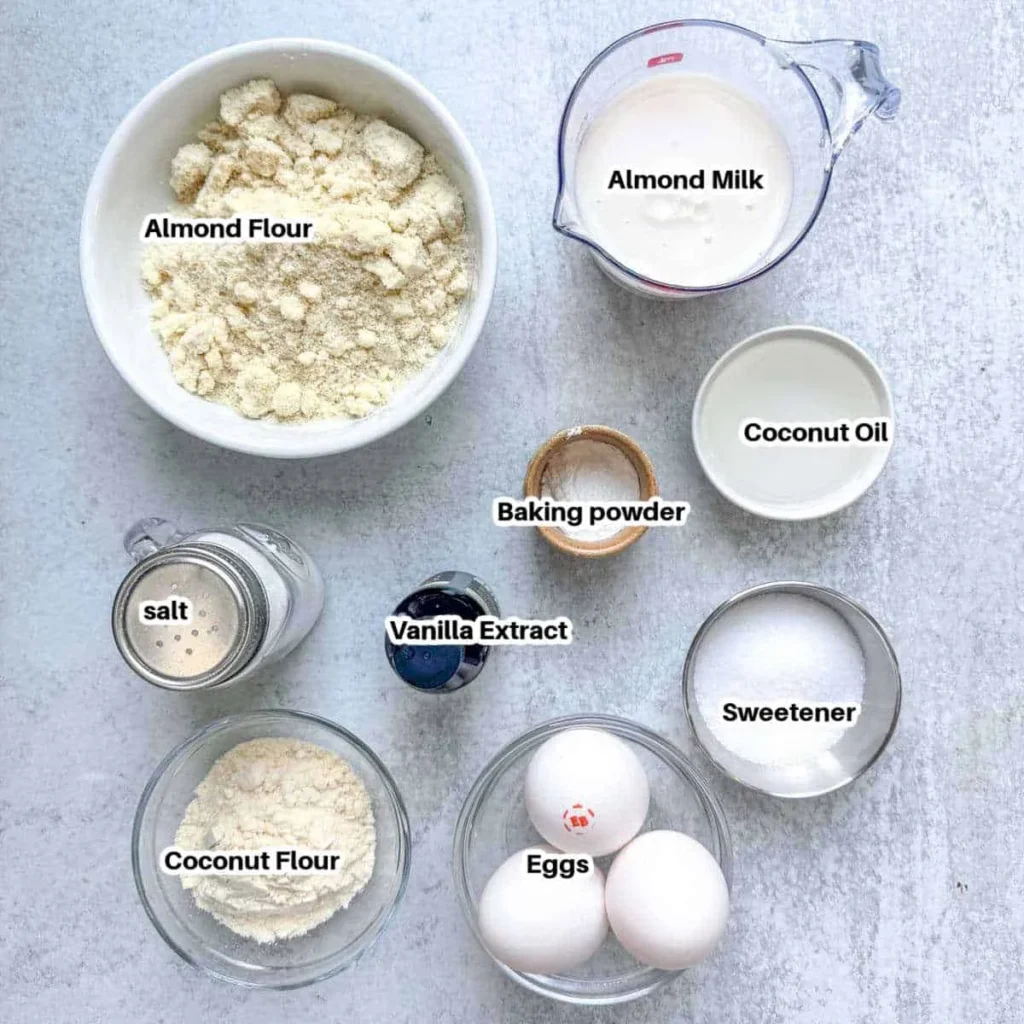
The 6 a.m. alarm goes off. You reach for the snooze button — third time — and somewhere in the back of your head there’s a voice saying pancakes. You know what’s waiting on the counter: a box of syrup-soaked discs, a bag of something called ‘waffle mix’, and a small guilt that lasts until lunch.
That’s the version I used to make. For three Januarys in a row, I’d set myself up with a ‘perfect healthy breakfast plan’ and abandon it by the second week. The pancakes won. These didn’t.
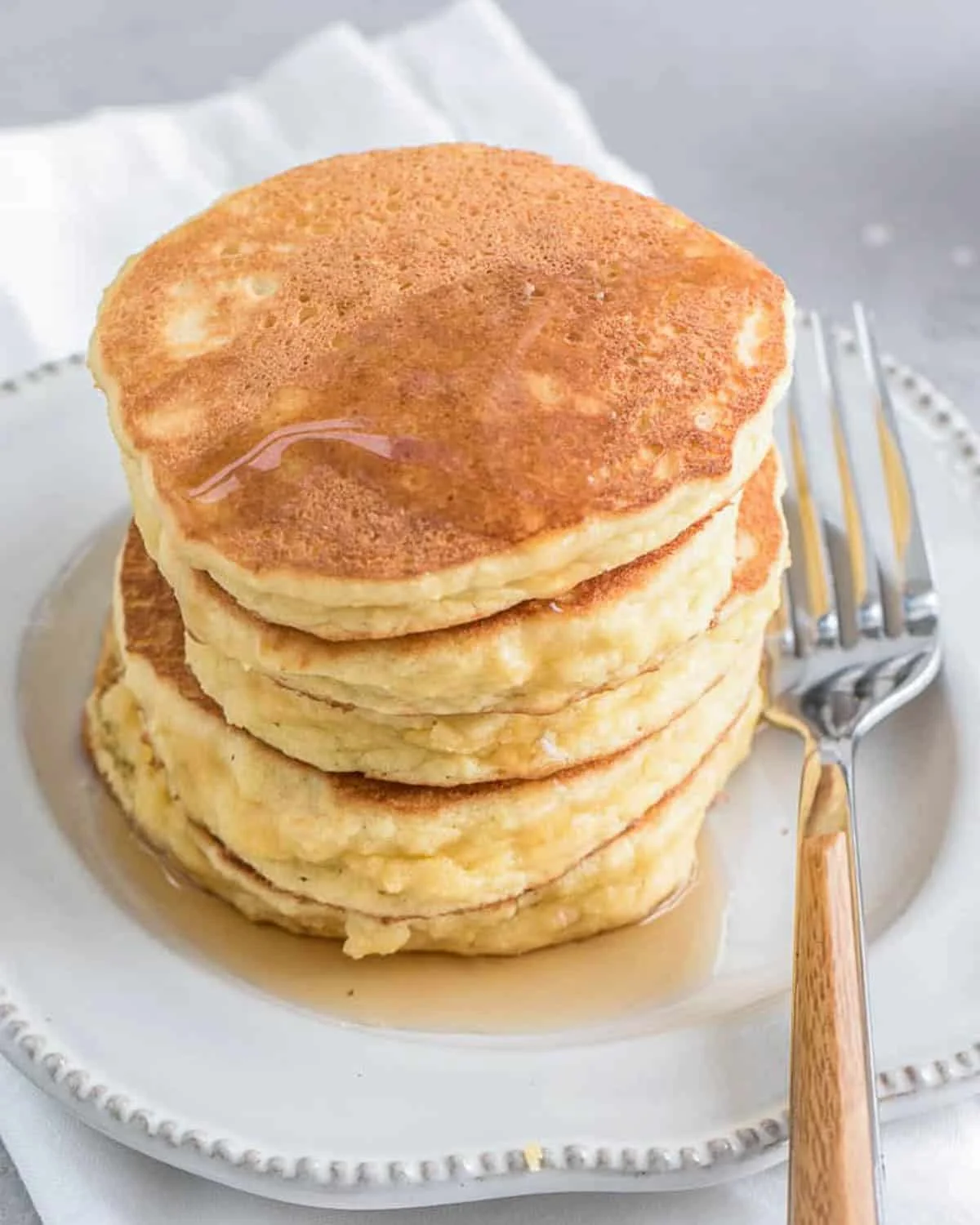
Why this recipe actually works
Most keto pancakes I’ve tried fall apart, taste like cardboard, or need ingredients I’d have to hunt down. This one uses two things you can already keep on a pantry shelf — almond flour and coconut flour — and the result is genuinely soft and fluffy, much closer to traditional pancakes than most low-carb versions.
Here’s the small science I learned from making this recipe over and over: coconut flour is a sponge. It absorbs a lot of liquid, which is exactly why it gives these pancakes their structure. But too much, even a little too much, and the batter turns to cement. So we measure it carefully. That one habit — a level scoop, no more — is the difference between a pancake you can flip and a pancake you cry over.
Ready in 20 minutes. Makes 8 medium pancakes. No special equipment beyond a thin spatula.
Ingredients
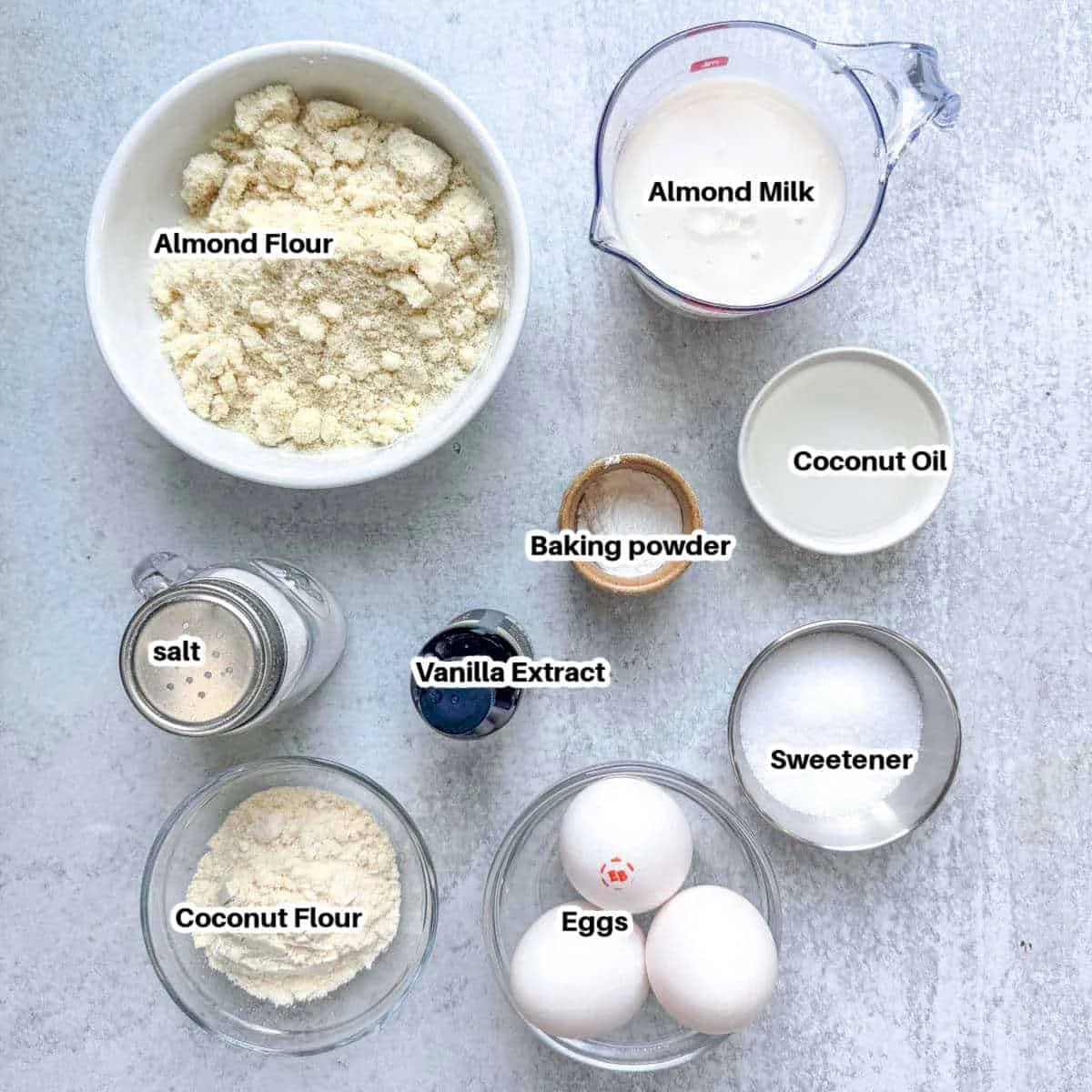
- 1 cup almond flour — fine, blanched. Not almond meal. The difference is texture, and it matters here.
- ¼ cup plus 1 tablespoon coconut flour — measure carefully, this is the structural backbone
- 2 tablespoons granulated erythritol (any granulated keto-friendly sweetener works)
- 2 tablespoons coconut oil, melted (melted butter works fine if you’re not dairy-free)
- 3 large eggs
- ¾ cup unsweetened almond milk (any unsweetened milk of your choice works too)
- 1 teaspoon vanilla extract
- 1 teaspoon baking powder
- ⅛ teaspoon salt
- Sugar-free keto syrup, optional, for serving
5 simple steps
1. Whisk the wet. In a medium bowl, whisk together the 3 eggs, 1 teaspoon vanilla, ¾ cup almond milk, and 2 tablespoons melted coconut oil until light and fluffy. About two minutes with a proper whisk — don’t rush it, that’s where some of the lift comes from.
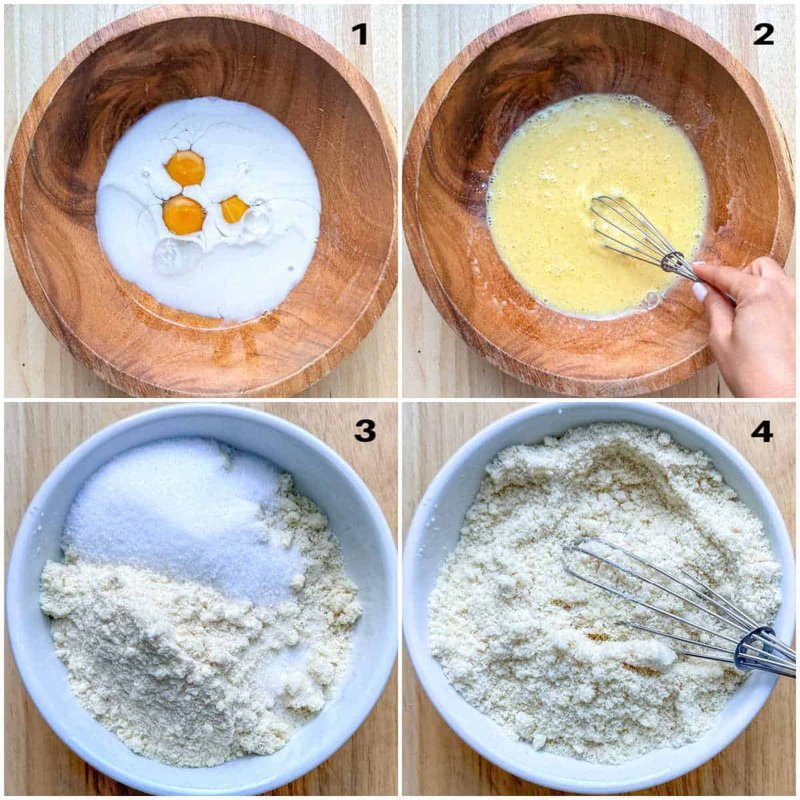
2. Mix the dry. In a second bowl, stir together the 1 cup almond flour, ¼ cup + 1 tablespoon coconut flour, 2 tablespoons erythritol, 1 teaspoon baking powder, and ⅛ teaspoon salt.
3. Combine and rest. Pour the dry into the wet and stir until a thick batter forms. Don’t overmix — a few small lumps are fine and actually help the texture. Then let the batter rest for 3 to 5 minutes while you heat the pan. This step thickens the batter so the pancakes hold together when you flip them.
4. Cook slow. Lightly spray a frying pan with non-stick cooking spray and set it over low to medium-low heat. Drop 2 tablespoons of batter into the pan and spread it gently into a circle. Cook for 3 to 4 minutes until bubbles form and the edges look set. These take longer to cook than regular pancakes — that’s normal, not a sign you’ve done something wrong.
5. Flip once, serve. Slide a thin spatula fully under the pancake and flip. Cook the other side until golden brown. Serve as they come out of the pan, or with sugar-free keto syrup.
Make it your own
This batter is a blank canvas. A few things I actually reach for:
- Fresh berries on top — the easiest, prettiest version
- Blueberries folded into the batter before cooking
- Sugar-free chocolate chips stirred in for a chocolate version
- A pinch of cinnamon in the batter for a warmer flavour
- Lemon zest mixed in for something bright and different
- Chopped pecans or coconut flakes on top
Leftovers. Store in an airtight container in the fridge for up to 4 days. Freeze with parchment paper between each pancake for up to 3 months. Reheat in the microwave for 20 to 30 seconds, or gently in a skillet over low heat.
Common mistakes
If yours don’t turn out right, it’s almost always one of these four things:
- Almond meal instead of almond flour. The meal is coarser and makes denser pancakes. Fine, blanched flour is the lighter version.
- Too much coconut flour. It soaks up liquid fast. A little extra and the batter is too thick to pour. Level scoop.
- Too high heat. The outside browns before the inside is cooked. Medium-low is the answer, even though it feels slow.
- Flipping too early. Wait until the edges are set and bubbles are forming. Flip with a thin spatula fully underneath so the pancake doesn’t break.
Questions I keep getting
Can I swap one flour for the other? No. Almond flour and coconut flour absorb liquid very differently, so they don’t substitute for each other equally.
Are these already dairy-free? Yes. The recipe uses almond milk and coconut oil. Just choose dairy-free toppings if you need to.
Why do the pancakes fall apart? They usually need a little longer before the flip. Let the edges set completely and use a wide, thin spatula.
Why use both flours? Almond flour brings the richness and moisture. Coconut flour soaks up the excess liquid and gives the pancakes structure. Together, they make the texture soft and fluffy instead of dense or crumbly.
Nutrition (per serving, 2 pancakes): 312 kcal · 17 g carbs · 12 g protein · 26 g fat · 6 g fibre. Figures are automatically calculated, so treat them as an approximation.
Start today
No need to overthink this. Three things:
- ✓ Put almond flour and coconut flour in the pantry this week so the next craving doesn’t lose to the cereal box
- ✓ Grab a thin spatula. If you don’t have one, that’s the only thing standing between you and these pancakes
- ✓ Pick a slow morning — weekend, not 6 a.m. — and give it 20 unhurried minutes
When you make these, I’d love to hear how they turned out. Leave a comment and tell me what you topped them with.
Today’s tiny step
Buy a bag of fine, blanched almond flour on your next shop. That’s it. The pancakes will wait until the weekend — the flour won’t.
— E, your habit neighbor