
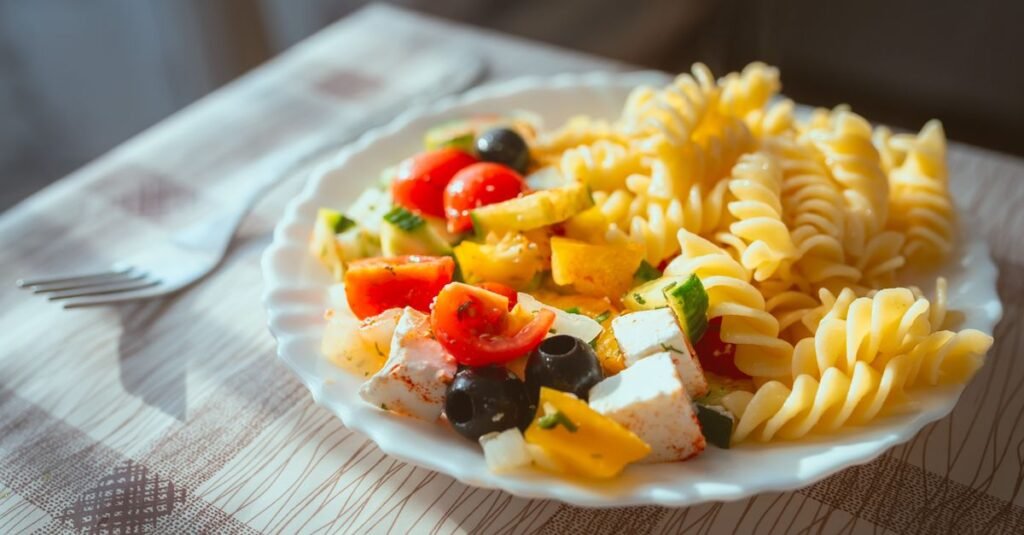
The fridge door opens, and you’re doing the weekly inventory again: wilted cucumber, a bag of spinach going soft in the corner, a jar of feta that’s outlived its best-by date by a week. I used to call that “the sad vegetable drawer.” Now I call it my salad pantry.
Because here’s my favorite little system: a big bowl of Greek pasta salad. Fifteen minutes of chopping and stirring, and suddenly the drawer is empty, the dinner question is answered for a few days, and nobody has to cook again this weekend.

Why this one stuck
I’m not a dramatic recipe person. I try a thing, and if it takes more than 15 minutes of my time, it usually disappears from rotation. This salad made it past my 15-minute test, and it keeps getting better, which is rare for anything that’s supposed to last in the fridge.
The dressing is just olive oil, apple cider vinegar, and oregano. Nothing creamy, nothing heavy. The feta is there for the salt and the crumble, not to weigh things down. And it genuinely tastes better after it sits for an hour than it does straight out of the bowl, which is the only kind of food I trust, because it means I can make it ahead.
Make it the night before, and dinner the next day is a lid-off, stir, done kind of thing. That’s the whole point of this recipe for me: it’s the low-effort version of “eating well.” It takes 15 minutes of prep and 10 minutes on the stove, and it feeds 8 to 12 people, so the batch size is never a problem in my kitchen.
Ingredients
- 6 oz bow tie pasta
- 1 cucumber, sliced and halved
- 2 Roma tomatoes, diced into large chunks
- ½ red onion, diced into large slices
- ½ cup artichoke hearts, well drained
- ¼ cup olive oil
- 3 tbsp apple cider vinegar
- 2 tsp oregano
- Salt and pepper to taste
- ½ cup feta cheese, crumbled
Everything except the feta goes in before chilling. The feta goes on top, at the very end, so it stays in pieces instead of mashing into the dressing.
5 simple steps
1. Chop the vegetables. Big chunks, not neat little dice. Texture is the point.
2. Cook the pasta according to the package. Drain it and run it under cold water until it’s cool.
3. Whisk the olive oil, apple cider vinegar, and oregano in a small bowl until it comes together into a proper dressing. This takes about 30 seconds, but skipping it is how you end up with two separate layers in your salad.
4. Toss the cooled pasta with the dressing in a large bowl, then add the vegetables and stir everything through.
5. Cover it and chill for 1 hour. That hour is not optional, in my kitchen. It’s when the flavors actually start talking to each other.
Crumble the feta over the top right before you serve. Done.
Start today
✓ Clear one shelf space in the fridge and label it “salad”. That’s the whole environment design.
✓ Buy the one thing you always forget: a decent block of feta and a jar of good olive oil. The dressing is 3 ingredients, and the quality of the oil is the difference between “fine” and “I want the bowl.”
✓ Pick one night this week to make it the night before. 15 minutes of chopping saves you 45 minutes of dinner decisions.
Make it your own
Sliced kalamata olives make it even more Greek, with a salty bite that disappears quickly, which is the best kind of flavor. A can of drained chickpeas turns this into a full meal instead of a side, which is my move on the nights I’m not making anything else. Swap the bow ties for rotini if you want the dressing to cling tighter to the pasta. A handful of baby spinach in there doesn’t change the flavor, but it adds the green I need. And if you have leftover grilled chicken, sliced on top makes it lunch without any extra effort.
One note on the vinegar: I’ve swapped it for red wine vinegar before, and it leans a little more into traditional Greek salad territory. Both work. I stick with apple cider vinegar because that’s what I keep in the cupboard.
Storage and the honest notes
Keep it in an airtight container in the fridge for up to 3–4 days. It’s one of those salads where the vegetables actually hold up, and the longer it sits, the better it gets. If the pasta has absorbed all the dressing by day three, give it a good stir and a little extra olive oil before serving. That’s not a failure, that’s just how this recipe behaves.
A few things I’ve learned the slow way:
- Cut the vegetables in large chunks. Neat small pieces disappear and the salad stops feeling substantial. I want to actually feel the tomato in my fork.
- Use a good olive oil. The dressing is so simple that the oil is the whole flavor. Cheap oil, cheap salad. That’s the whole trade.
- Whisk the dressing until it emulsifies. Oil and vinegar want to separate, and whisking them together is what keeps the flavor even across the whole bowl instead of in one sad corner.
- Drain the artichoke hearts properly. The liquid from the jar waters down the dressing and changes the whole balance. A good squeeze before you add them is worth the effort.
- Give it the full hour in the fridge. It’s fine straight away, but the version an hour later is the one I remember.
A few questions I get asked
Can I make this ahead? Yes, and it’s one of the best things to make ahead. The vegetables hold up, and the olive oil dressing doesn’t soak into the pasta the way creamy dressings do. The version from the night before is the version I’d actually serve at a dinner party.
What feta works best? A block you crumble yourself, every time. The pre-crumbled version in the container works fine, it’s just a little drier. Feta is the thing that makes this a Greek pasta salad, so I wouldn’t skip it.
Can I use store-bought dressing? You can. I recommend against it, but if you’re in a hurry, a Greek vinaigrette or Italian dressing works better than anything creamy. The homemade version takes 30 seconds to whisk, though.
Today’s tiny step
Buy the feta and the olive oil this week. That’s it. The rest happens when you open the bowl next time the sad vegetable drawer stares back at you.
— E, your habit neighbor