
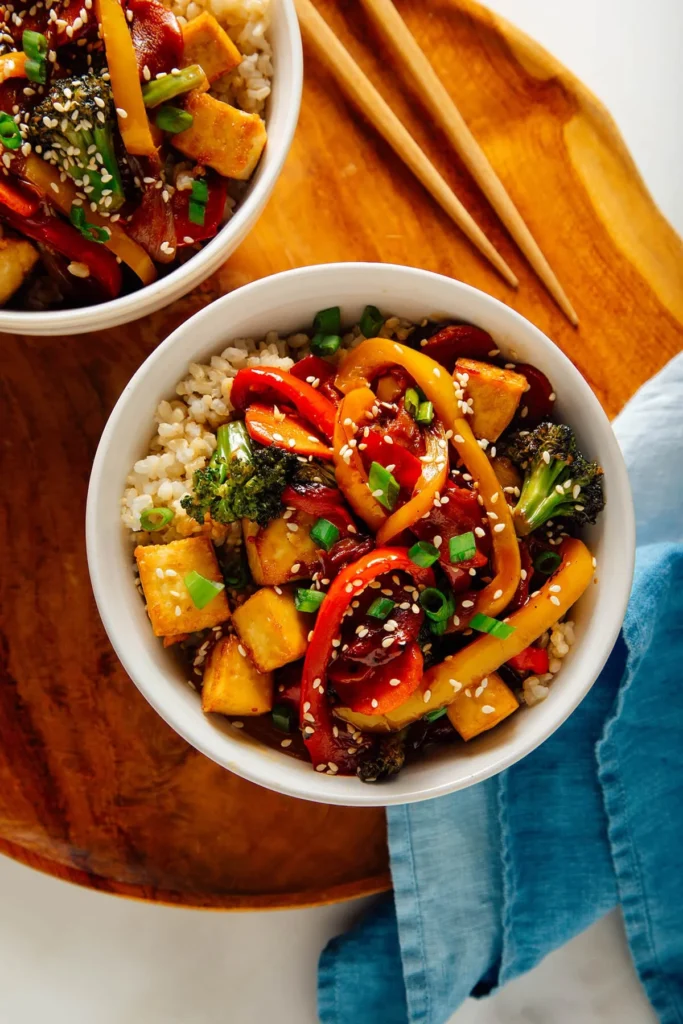
It’s 6:15 on a Tuesday and the fridge lights up: half an onion, a couple of limp carrots, a bag of broccoli that’s about to decide what kind of week it wants to be. You’ve got roughly half an hour before dinner and zero energy to haul out the wok you’ve been meaning to learn for three years. So you do what I’ve been doing — you turn on the one skillet you already own and make a stir fry that tastes nothing like takeout.
/Cover below: the whole thing, plated, with a sprinkle of toasted sesame seeds and green onion on top.
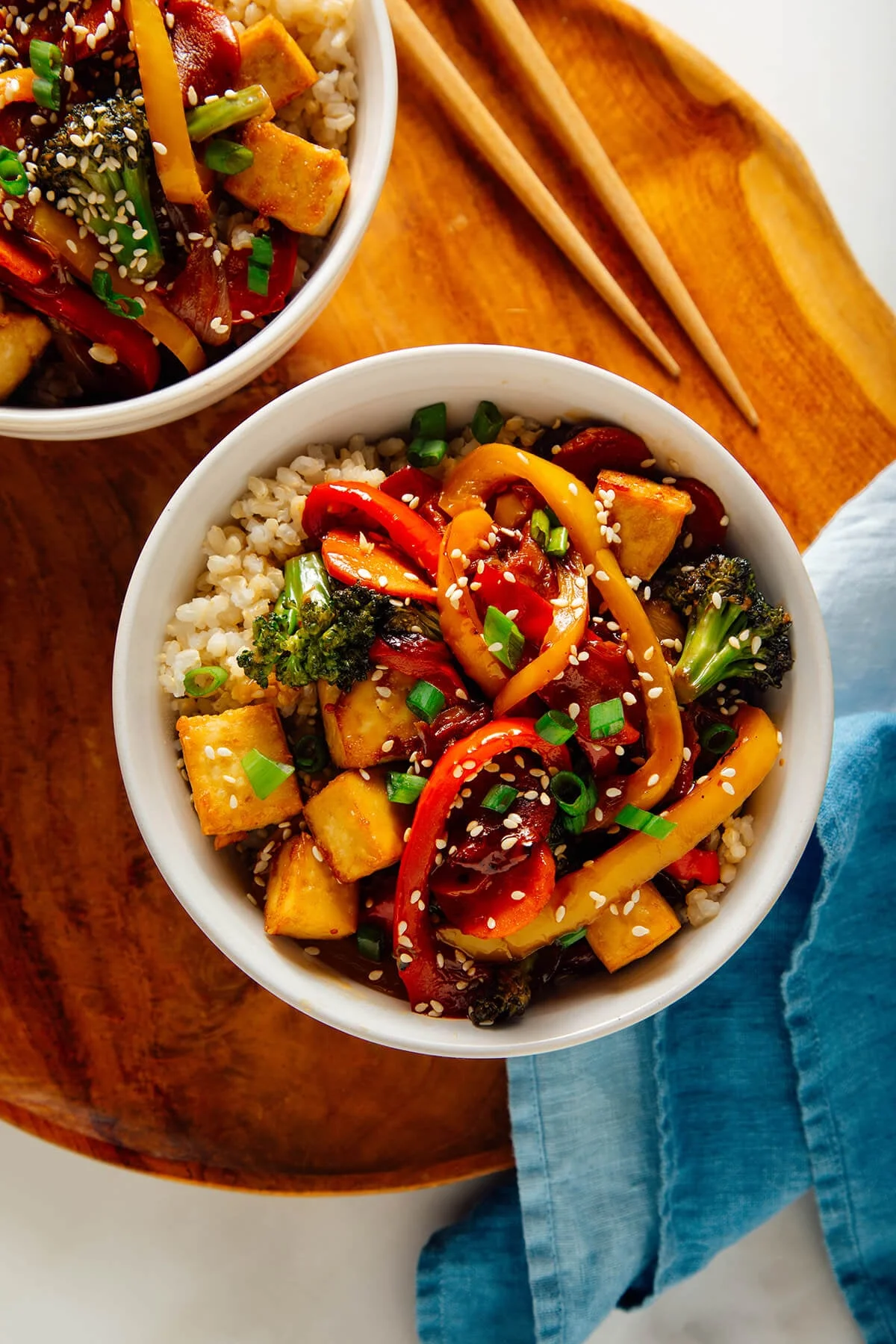
This is the version I keep coming back to. The vegetables come out fork-tender with real seared edges, and the sauce leans savory rather than sweet. I love this particular mix of broccoli, bell pepper, carrot and red onion, but it’s built to change with whatever’s on sale at the farmer’s market that week.
Serve it as a side, or make it a meal the way I usually do — over rice with protein on top, like the crispy baked tofu in the photo above. It keeps for up to four days in an airtight container and reheats in the microwave, so you’ve got tonight and a few easy days that week covered.
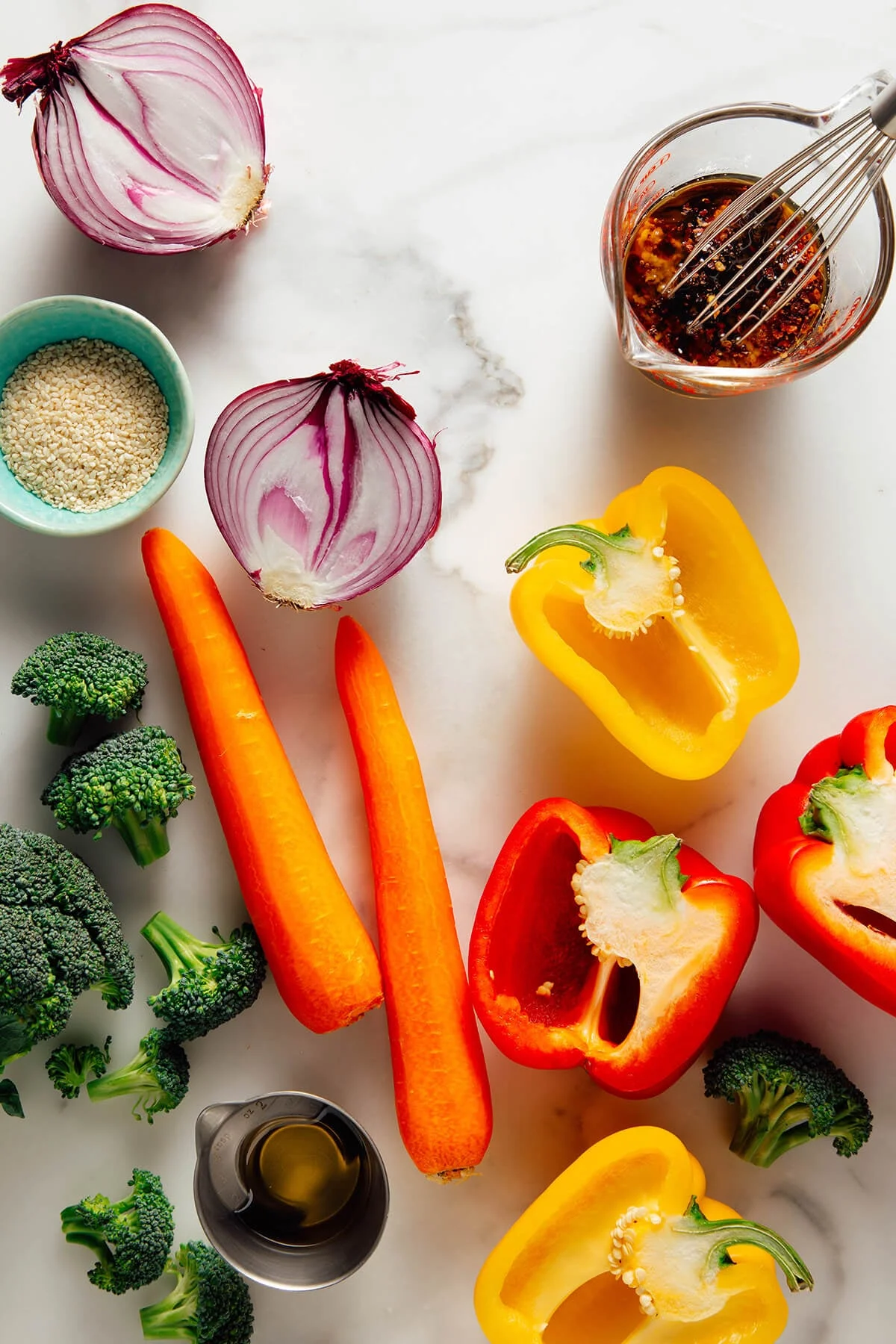
Everything you need, laid out: the vegetables, the dry pan-and-plate dressing, the sauce already whisked in a cup. When you prep like this, the actual cooking is the easy part.
Why this skillet method works
Traditional Chinese stir-fries are cooked over high heat in a big wok — that technique grew up hundreds of years ago as a fast way to cook food and save fuel. Cooking in a wok is a genuine skill that takes practice, and honestly I never got mine to stop setting off the smoke detector.
So I changed the method. This one works in a large skillet — cast iron or stainless steel both do it — and the trick is a moment of steam. After the first sizzle, you add a splash of water and cover the pan. The vegetables steam gently against the seared edges instead of burning, and you don’t have to babysit a roaring flame. I was surprised by how well it cooks, and it’s the reason this became my default.
It’s the same idea as a covered-pan sauté — the lid traps moisture so the vegetables soften through, while the uncovered seconds give you that caramelized, charred taste you want.
The ingredients
Everything here is common and cheap-ish in the best way, and the whole list is exactly what’s in the recipe card below. The seasoning does the heavy lifting.
The sauce (made in a cup, not the pan)
- ⅓ cup reduced-sodium soy sauce or tamari (regular soy sauce is too salty)
- 1 tablespoon toasted sesame oil
- 1 tablespoon honey or maple syrup
- 2 teaspoons arrowroot starch, or 1 teaspoon corn starch
- 2 large cloves garlic, pressed or minced
- ¼ teaspoon crushed red pepper — leave it out if you keep it mild
- 1 tablespoon sesame seeds, for the top
For the pan
- 1 tablespoon avocado oil, coconut oil, or whatever you stir-fry with
- 1 small red onion, root and tip trimmed, cut into ¼-inch wedges (about 1 cup)
- 2 medium carrots, peeled and cut into very thin rounds (about 1½ cups)
- a pinch of salt
- 1 medium red bell pepper, cut into ¼-inch strips (about 1¼ cup)
- 1 medium yellow bell pepper, cut into ¼-inch strips (about 1¼ cup)
- 1 cup small broccoli florets (from about 1 stalk)
- 2 tablespoons water
- thinly sliced green onion, to serve
Five simple steps
This is the whole method. It comes together in about 30 minutes total — 15 to prep, 15 on the stove.
1. Whisk the sauce first. In a liquid measuring cup, combine the soy sauce, sesame oil, honey, starch, garlic and red pepper flakes if you’re using them. Whisk until blended and set it aside. Making it in advance means the seconds on the pan never feel rushed.
2. Toast the sesame seeds. Warm the seeds in your large skillet over medium heat, stirring all the time, until they’re fragrant and just turning golden, about 1 minute. Pull them out to a plate. This one extra step is what makes the dish taste like it actually came from a restaurant — it’s worth the effort.
3. Start the aromatics. Warm the oil over medium heat until it shimmers. Add the onion, the carrots and a pinch of salt. Crank to medium-high and cook, stirring every 30 seconds or so, until the onions soften, about 4 to 6 minutes. If you catch a smell of turning, drop the heat a notch — this is not a race.
4. Steam-sear the rest. Add the peppers and broccoli and stir to coat. Pour in the 2 tablespoons of water and immediately cover the pan. The move here: stir only about every minute, then cover again. That gap is what lets the vegetables caramelize against the pan instead of stewing. They’ll be fork-tender with beautifully seared edges in about 7 to 9 minutes.
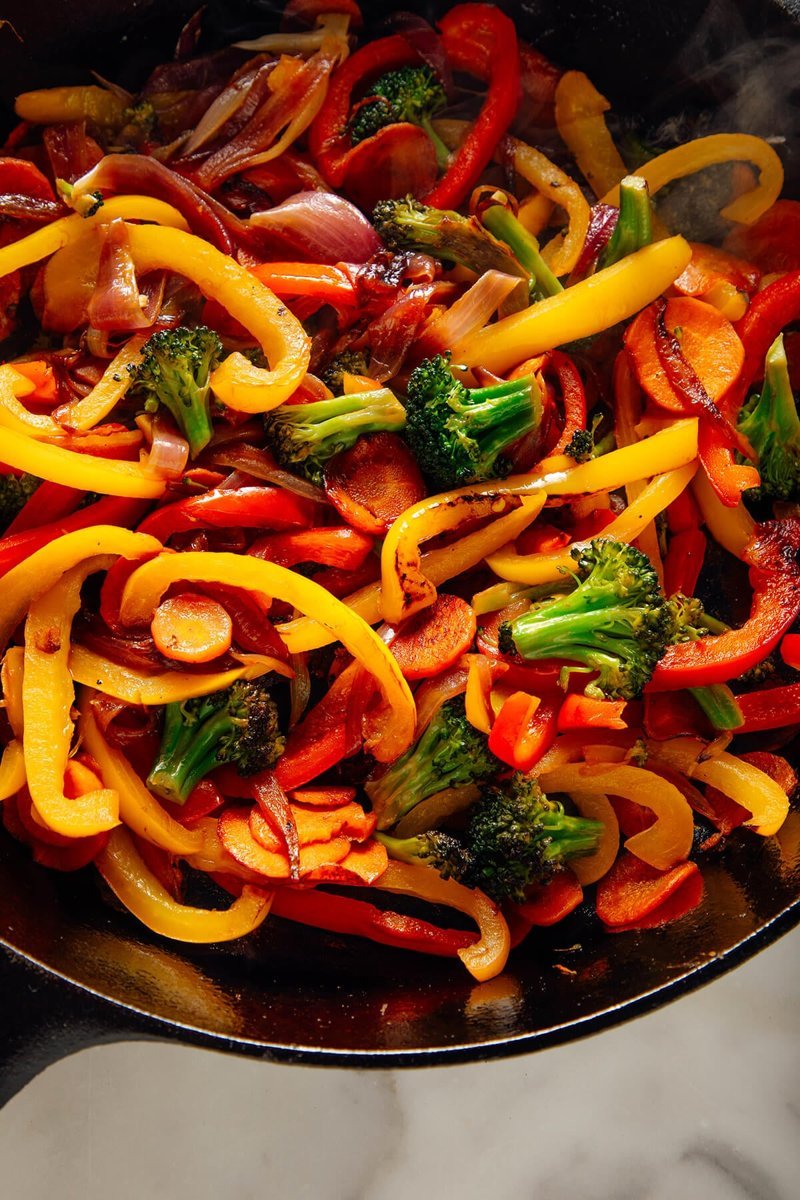
The moment you uncover, the pan should look like this — glossy vegetables, seared edges, nothing burnt.
5. Dope it in sauce and serve. Take the skillet off the heat. Pour in the sauce you whisked earlier and stir to coat. As the warmth of the vegetables hits it, the starch thickens the whole thing into a glossy finish. Taste, and add a tiny pinch of salt if it wants more. Serve in bowls, sprinkled with the toasted sesame seeds you set aside and a shower of green onion.
Make it your own
The vegetables here are a suggestion, not a law. I keep the red onion in every version — it carries the flavor — but the rest is fair game. Use about 4 cups of any tender vegetables, cut small and evenly so they cook at the same speed. Zucchini or yellow squash, asparagus, snap peas, snow peas, cauliflower, baby corn or green beans all work. If you change the vegetables, cook the onion on its own, then cook your chosen tender vegetables in place of the peppers and broccoli.
Want more greens? Add 1 to 2 cups of chopped kale, chard or spinach after you uncover the pan, and stir until wilted, about 1 minute. To make it vegan, swap the honey for maple syrup. To make it gluten free, use certified gluten-free tamari — regular soy sauce is not. One honest note: I don’t recommend mushrooms with the steaming method. I’ve tried it and the texture goes vague, so I keep them for the wok night.
As a side, serve it as written. As a meal, pile it over rice with crispy tofu, fried or scrambled eggs on top, or whatever protein is already in the house. And that’s the whole point — no special trips, no equipment you’re still buying, just a pan, a lid and half an hour, which most of us actually have if nothing else.
Start today
- Buy one medium onion, a couple of carrots, a head of broccoli and a bell pepper — that’s the whole base, and it’s plenty for a few dinners.
- Whisk the sauce in a cup before you heat the pan. It takes 30 seconds and it changes the rhythm of the whole thing.
- Set a 30-minute kitchen timer the moment you start. When it goes off, the plate is done.
Today’s tiny step
This week, when you’re trying to order takeout and the drive-thru is a temptation — make just the sauce instead. Whisking it takes about 30 seconds, and if the sauce is alive in your kitchen, the vegetables are ten minutes away. I have tried the perfect plan and the one I always hit by week two. This is the version that survives because it’s small, and 30 honest minutes beats a big one you don’t do.
How does yours turn out? Tell me in the comments — I read every one.
— E, your habit neighbor