
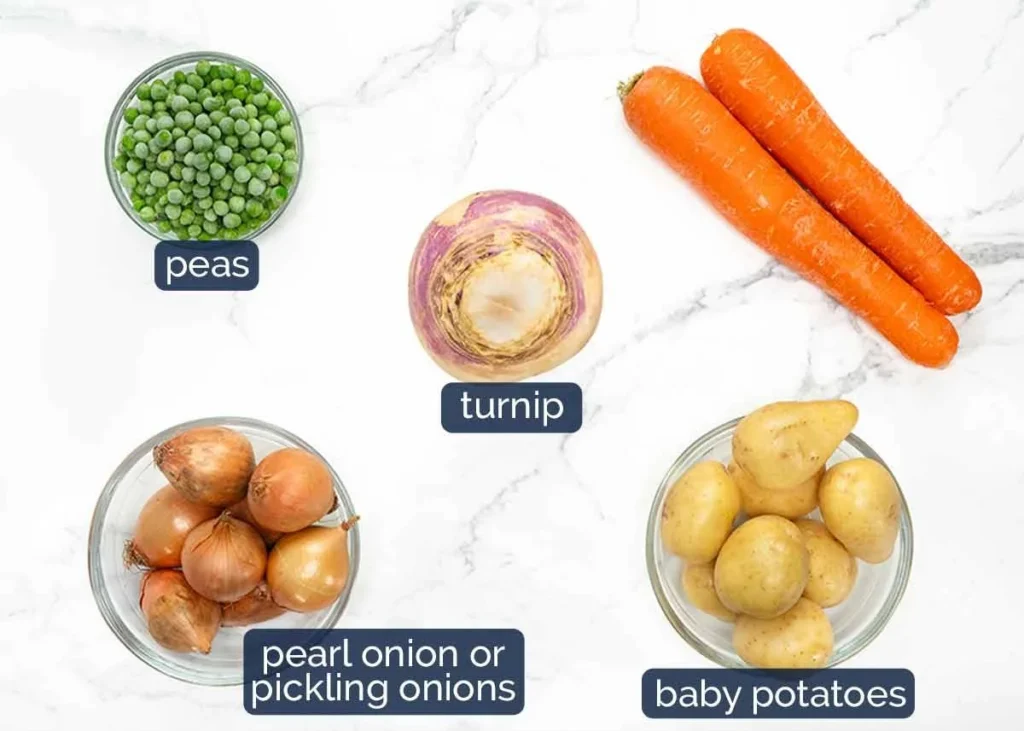
The pot’s been on the stove for over an hour. The kitchen smells like something’s going right, and the best part is: there’s nothing else to cook. That’s the whole point of a good stew — you do the active part up front, then the slow heat does the rest of the work while you finish the evening.
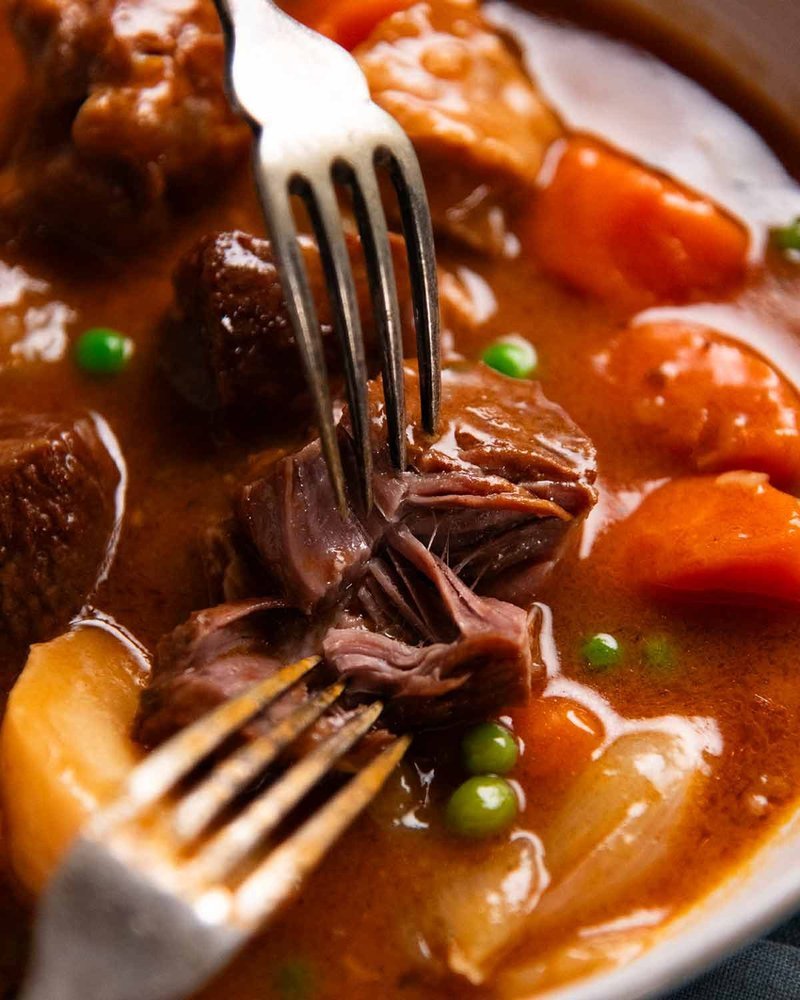
Lamb Navarin is one of France’s great classic stews (ragoûts). Lamb is slowly braised until it’s meltingly soft, in a rich sauce with potatoes and vegetables that soak up all that flavour. If you’ve never made a French stew before, this is a lovely one to start with — it’s easier to make than Coq au Vin or Boeuf Bourguignon, and you don’t need anything fancy.
Why it works
What I really love about this dish is the sauce. Stew sauces can sometimes taste a bit same-same — tasty, but familiar. This one’s different. The lamb gives the broth a deeper, richer flavour than other proteins, and as the vegetables slowly cook until they’re soft enough to melt in your mouth, they keep giving their flavour back to the sauce. It’s hearty without being heavy.
There’s another small thing I love: it’s a complete meal in one pot. No side mash, no second pan to wash. Just this, and a loaf of warm bread.
Fun fact: the name Navarin comes from the French word navet, meaning turnip. Traditionally it was a spring dish made with the first young vegetables of the season, and these days it’s made all year round with whatever’s in season. Turnips, though, are the one vegetable that’s always expected to be in it.
Ingredients
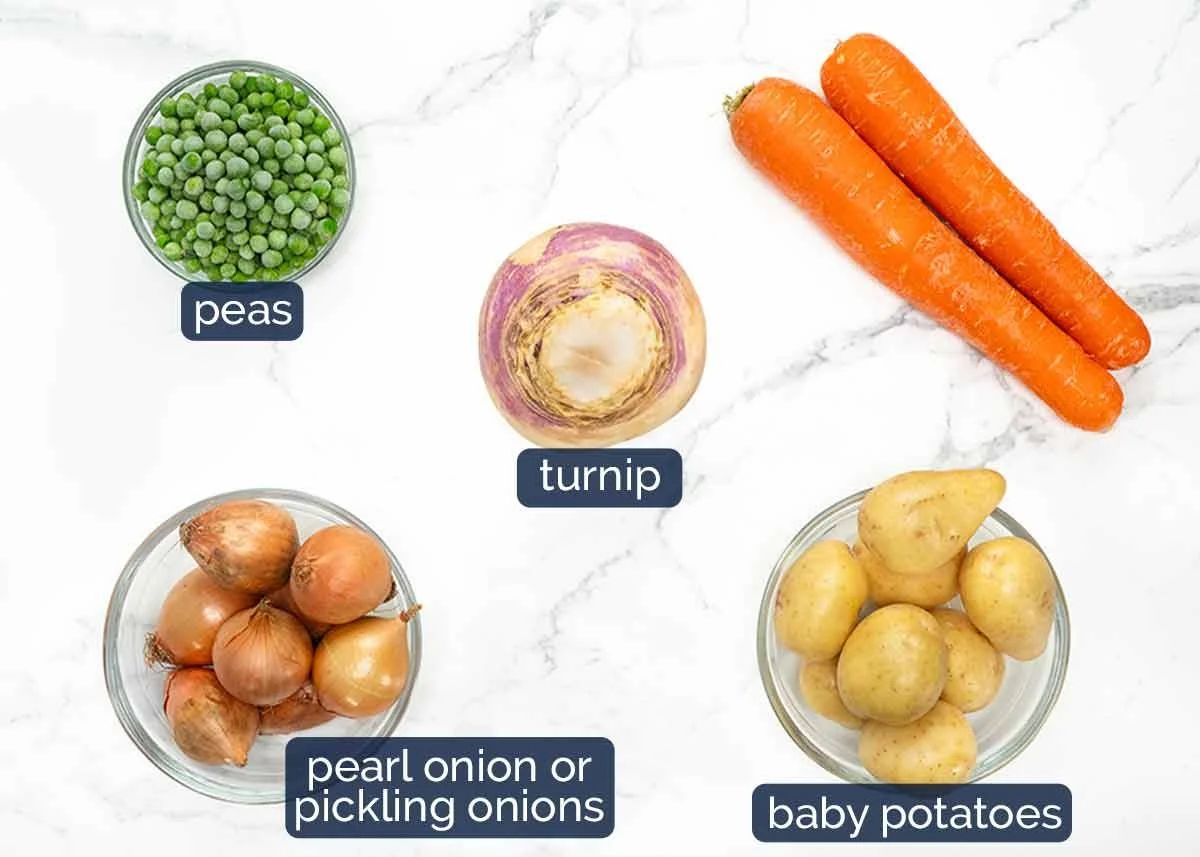
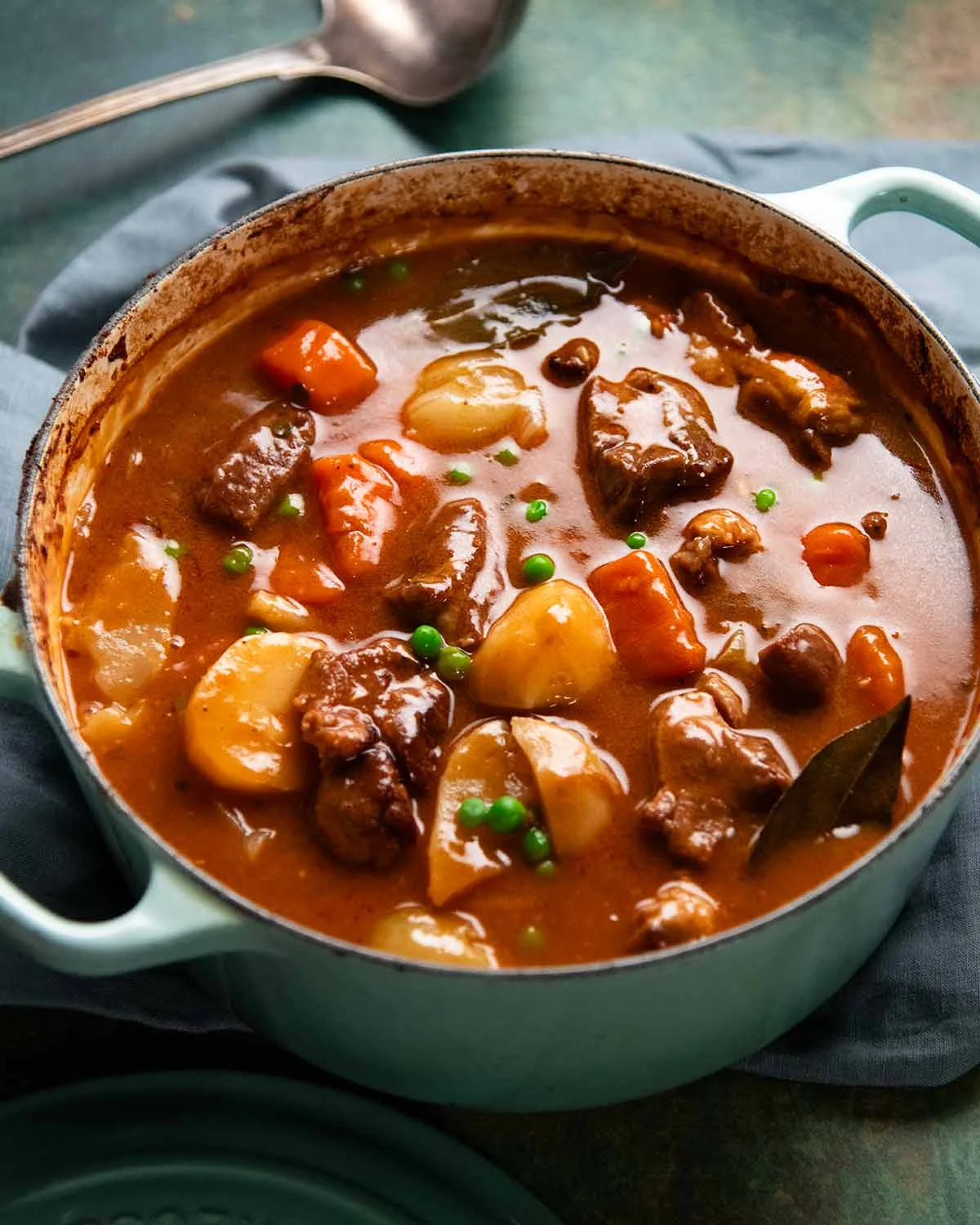
Here’s what you need. I’ll give you my honest notes on the trickier bits, like finding turnips and pearl onions — both have easy substitutes.
- 1.25kg / 2.75lb boneless lamb shoulder, excess fat trimmed, cut into 5cm / 2″ pieces
- 1 3/4 tsp cooking/kosher salt (or half that if using table salt, +50% if using salt flakes)
- 2 tbsp vegetable oil or other plain oil
- 8 baby potatoes (500g / 1lb), peeled and cut in half
- 1 large turnip (~350g / 12oz), peeled, cut into 8 wedges then each wedge in half
- 8 pearl onions or small round pickling onions, peeled
- 2 large carrots (~200g / 7oz each), peeled, cut in half lengthways then into 2cm / 0.8″ pieces
- 3 garlic cloves, finely minced
- 3 tbsp tomato paste
- 1/3 cup plain flour / all-purpose flour
- 1 cup chardonnay or any other dry white wine
- 1 litre (4 cups) chicken stock or broth, low sodium
- 1 tsp cooking/kosher salt (or half for table salt, +50% for flakes)
- 1 tsp black pepper
- 3 sprigs fresh thyme (substitute: 1/2 tsp dried)
- 2 bay leaves (substitute: dried)
- 1 cup frozen peas
- Warm crusty bread, for serving
On the lamb: shoulder is the best cut for this — a tougher cut with plenty of marbling, which keeps the meat juicy through the long, slow cook. Buy a whole piece and cut it into large chunks yourself. Pre-cut pieces are usually too small and finish before the sauce has developed its full flavour, and lean cuts like lamb leg tend to dry out. I wouldn’t swap it for anything else.
On the vegetables: the waxy kind of baby potato holds its shape and soaks up the sauce without falling apart — pick ones that are the same size so they cook evenly. Turnips have a crisp, mildly peppery flavour when raw, but they turn tender, sweet and mellow as they cook. Can’t find them? Swede (rutabaga) or just more potatoes are excellent substitutes.
On the onions: pearl onions are a classic in French stews, but they can be hard to find. Pickling onions are the ideal substitute — they’re slightly larger, so peel away an extra layer or two until they’re about 2.5cm / 1 inch across. Soak them in cold water for 10–15 minutes to soften the skins and they’ll peel easily. No luck with either? Use 2 regular brown or yellow onions, halved and cut into 1cm / 2/5-inch wedges.
Everything else: garlic and thyme and bay leaves are the classic aromatic base. Tomato paste adds body and deep colour to the sauce. Flour gently thickens it. And the wine — you don’t need an expensive bottle, most of the aroma is lost during cooking anyway. Low-sodium chicken stock is the best base for the liquid: it adds savouriness without masking the lamb, and after the long cook you’d never guess it’s chicken. (Homemade stock, if you have it, takes the sauce to another level.)
5 simple steps
Preheat the oven to 180°C / 350°F (160°C fan). Prep takes about 45 minutes, and the total time from start to finish is about 3 hours 15 minutes. The active part is under 30 minutes — the oven does the rest.
- Brown the lamb. Pat the lamb dry and season with the 1 3/4 tsp salt. Heat the oil in a large, heavy-based, oven-proof pot (mine is 24cm / 9.5″) over high heat. Add one third of the lamb and brown it well, about 3 minutes, until deeply coloured all over. Remove, then repeat with the remaining lamb. Those brown bits stuck to the bottom of the pot are where much of the sauce’s flavour comes from — leave them. No more oil needed; the lamb has released plenty of its own fat.
- Build the base. Turn the heat down to medium high and add the onions. Cook for 2 minutes, stirring, until they’ve got nice golden patches, then set them aside in a bowl — they go back in partway through. Add the carrots and stir for 2 minutes, then the garlic, and cook quickly for 20 seconds. Add the tomato paste and cook for 1 minute, stirring constantly — this takes the raw edge off and brings out its sweetness.
- Mix, then hand it to the oven. Return the lamb with any collected juices and stir in the flour for 1 minute. Pour in the wine and stir until the lamb is coated in a loose, pale paste — the flour should be completely dissolved, no dry patches. Add the chicken stock, thyme, bay leaves, 1 tsp salt and the pepper, and stir well. Bring to a simmer, cover, and bake for 1 hour. This gives the lamb a head start on softening before the vegetables go in.
- Add the vegetables, keep it gentle. Stir in the potatoes, turnips and the onions you set aside, pushing them into the sauce as best you can — don’t worry if a few pieces peek above the surface. Cover and return to the oven for another 1 1/2 hours, until the lamb is fall-apart tender and the vegetables are buttery soft.
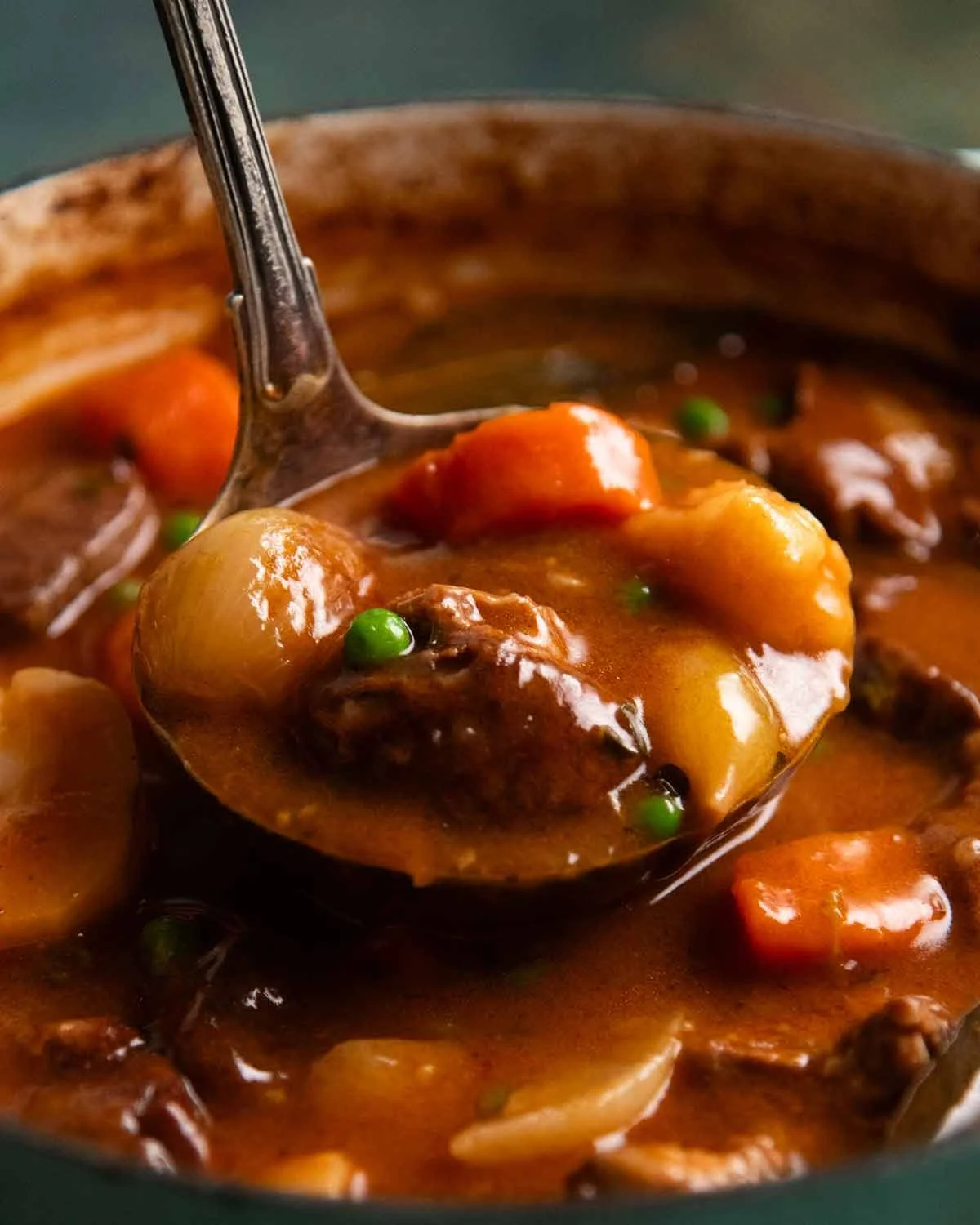
- Finish with the peas. Gently stir in the frozen peas (no need to thaw — they’re already cooked, they just need warming), then cover for a couple of minutes so they heat through and keep their bright colour. Taste the sauce and adjust the salt, then serve.
If you don’t have an oven, you can do the whole slow cook on the stove at very low heat for the same total time — just stir regularly and gently so the meat and vegetables don’t break. I wouldn’t use a slow cooker; the flavour simply doesn’t develop the same way.
How to serve it
Lamb Navarin is a complete meal on its own — rich, comforting, full of flavour. But it’s even better shared with a loaf of warm, crusty bread for mopping up the sauce. For me that’s a must. If you want something more substantial, serve it over steamed rice with a simple bistro salad. I do that sometimes too.
Make it your own
- Gluten-free? Swap the flour for a good gluten-free plain flour blend. It’s only there to lightly thicken the sauce, so the recipe works just as well.
- No wine? Use the same amount of non-alcoholic wine, or just more low-sodium chicken stock. You’ll lose a little depth, but it’s still delicious.
- Making it ahead? This is even better the next day. Cool it, refrigerate overnight, then gently reheat over low heat. Leftovers keep up to 4 days in an airtight container, and it freezes well for up to 3 months — thaw overnight in the fridge and reheat gently, adding a splash of water or stock to loosen the sauce if it’s thickened.
- Spring version: in France, spring Navarin uses delicate vegetables like asparagus, Dutch carrots and fava beans. Those are too fragile for the long braise, so they’re cooked separately and stirred in towards the end.
One note on salt: always taste at the end before serving. How much you’ll need depends on whether your store-bought stock is already well-seasoned, so that final check is yours.
Nutrition per serving: 521 calories, 46g carbohydrates, 42g protein, 16g fat, 8g fibre.
Start today
- ✓ Put 1.25kg of lamb shoulder on the weekend shop list
- ✓ Check you have turnips (or swede) and pickling onions on hand
- ✓ Pick the evening you want a one-pot dinner — the oven does the rest
Today’s tiny step
Don’t need a whole stew to start — just add one pot-worthy ingredient to your next shop list. That’s the whole step. The stew can wait until the evening you’re ready for it.
— E, your habit neighbor